
Skip to main content Skip to footer
Menu
ski biscuiting ski biscuiting

Responsible boating

Heading out to enjoy one of the region's many lakes, rivers or harbours? Whether you’re going fishing, planning a quiet kayak or taking the jetski for a spin, you must follow the navigation and safety rules.

Know the rules 

Skippers or drivers of any powerboat capable of speeds in excess of 10 knots must be 15 years of age or over. It is the skipper's responsibility to ensure the safety of the craft and crew on board. This includes knowing and understanding the rules of the road at sea. If you have an accident, ignorance of the rules set by the Navigation Safety Bylaw is not accepted as an excuse. 

The Bay of Plenty Regional Council has a statutory role in ensuring maritime safety in its region by developing Navigation Bylaws under the Maritime Transport Act 1994. These Bylaws are in place to minimise the risk of fatalities, injuries, nuisance, accidents, collisions, and damage in the Bay of Plenty navigable waters. 

Speed 

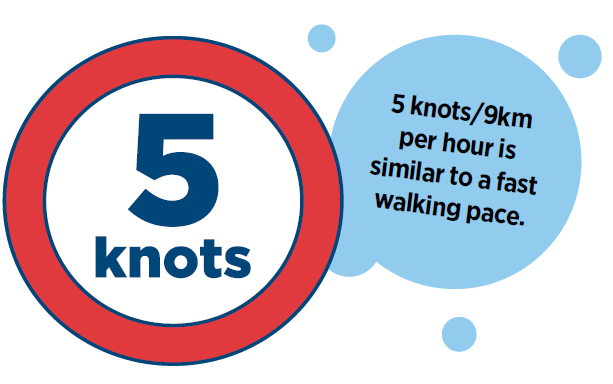
You must travel at a safe speed at all times. Know The Five Knot Rule! Your boat must not exceed five knots when: 

  • Within 200 metres of the shore or a structure. 
  • Within 200 metres of any vessel flying the International Code A Flag, for example, a dive flag.  
  • Within 50 metres of another boat, raft or person in the water.  
  • When the boat has anyone at or on the bow, with any portion of his/her body extending over the fore part, bow or side of the vessel.

5knotslow

Always take into account: 

  • The manoeuvrability of your craft 
  • Visibility 
  • Wind and sea state 
  • How busy it is on the water around you 
  • Other water users 
  • Hazards in the area


Give way rules

Who gives way? When two boats are approaching each other, one has the right of way. The ‘give way’ rules depend on what type of boat you’re on and the type of boat you’re approaching. Find out the water traffic rules below.

Water skiing 

It takes three to ski. If you’re towing someone behind your boat, jetski or other personal watercraft, whether they’re on skis, a wakeboard or biscuit, you must have an observer aged 10 or over who can communicate the actions of the person being towed. 

As a skipper you need to: 

  • Keep to designated ski areas (or make sure you are more than 200 metres offshore). 
  • Always have an observer who is more than 10 years old. 
  • Always tow in an anti-clockwise direction. 
  • Ensure anyone being towed is wearing a lifejacket 
  • Only ski between sunrise and sunset. 

Stay in your lane! Know the ski lane rules.

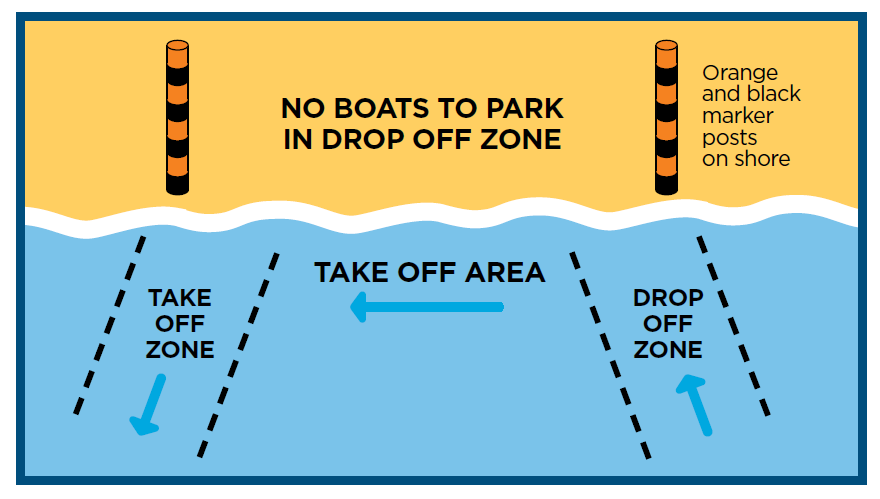
The designated ski lanes and ski areas throughout the region give priority to these activities. 

ski lane

Own a jetski? You need to register it! 

jetskiing

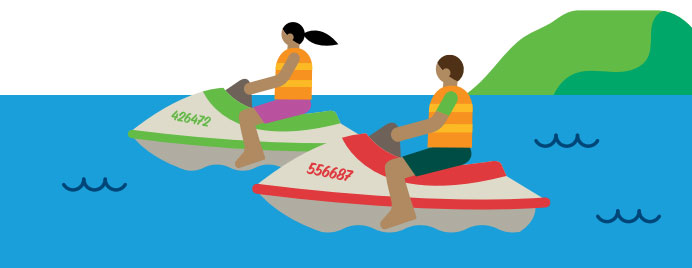
All jetskis and other personal watercraft (PWC) using Bay of Plenty waterways must be registered. 

To keep costs to a minimum we have teamed up with Auckland Transport for all jetski and/or other personal water craft registrations. Head to the Auckland Transport Harbourmaster page to register.  

Registration is a one-off fee, valid for the lifetime of the machine and covers the Bay of Plenty, Auckland, Waikato and Northland regions. 

These machines are fast and exciting but need to be handled with care. The same boating rules apply to jetski and other personal water craft as for boats. 

There are designated areas for jetski to speed but there are also areas where they are not allowed. Make sure you know where before you head out. 
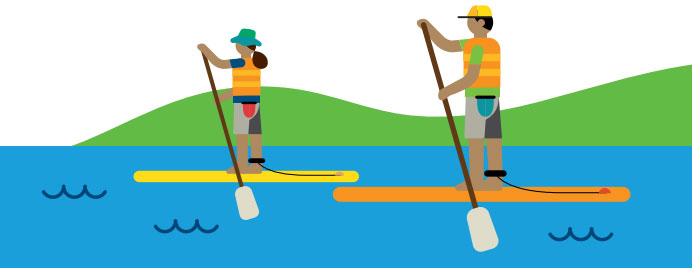
Kayaking and paddleboarding

paddleboarding

The Bay of Plenty is a paddling paradise. Here are some simple tips to keep you safe when you head out on the water. 

  • You MUST carry a correctly fitting lifejacket or personal floatation device (PFD). We recommend you wear one at all times. 
  • Make sure you have at least one form of waterproof communication, like a cell phone in a waterproof bag or a VHF radio. 
  • Wear suitable warm clothing. 
  • Carry a bailer or pump. 
  • Check the weather and tides before heading out. 
  • Let someone know where you are going and when you expect to be back. 
  • Kayak with mates. 
  • Be visible. Sticking reflective day glow or high visibility tape to your paddle blades is a good idea. 
  • Know your limitations. 
  • Talk to a local if you’re paddling in a new area - contact your local canoe/kayak retailer or local Coastguard unit. 
  • Make sure your kayak is clearly marked with emergency contact details. 

  • Check the weather. It’s vital to know what the wind is forecast to do during your paddleboarding adventure. 
  • Check the tides so you know what to expect during your time out on the water. 
  • Avoid offshore winds. These are the ones that blow you away from the shore. Plan your trip and launching site with this in mind. 
  • Paddle with a mate. It’s more fun and safer with a friend or in a group. 
  • Carry at least one form of waterproof communications - this could be a VHF radio or cell phone in a waterproof bag. 
  • Learning: Take a lesson from a professional paddleboard instructor to learn good techniques early and gain maximum enjoyment from this sport. 
  • Safety: Avoid areas where there are lots of other boats, strong currents and dangerous rocks. Don’t be afraid to adopt the ‘safe position’ (paddle from a kneeling position) to get back to the shore if you’re finding it too hard or unstable, or there is too much wind. 
  • When paddleboarding on flat water you must carry a PFD and we recommend you wear it at all times. Your paddleboard is the biggest flotation device you have, so stay with it. Wear a leash when paddling on flat water. 
  • Stand up paddle boards in the surf are exempt from carrying communications or carrying a PFD, as long as you are wearing a leash. 
  • In fast flowing rivers it is recommended that you wear a PFD but do not wear your leash. 

Maritime rules require kayakers to carry a torch to prevent collision. However, holding a torch may prevent you from paddling effectively and therefore being seen!

Wearing a head torch allows your arms to be free to paddle. Or, mounting an all-round white light on your rear deck above head-height means you will be visible from all directions. 

Night lights

To help other boaties understand what you’re doing and which way you’re heading while you’re underway, your boat must display lights from sunset to sunrise and in rain and fog. Not using lights is dangerous and could result in a fine. 


Name your boat!

Thinking of buying a boat? Make sure you’ve got a name picked out!  

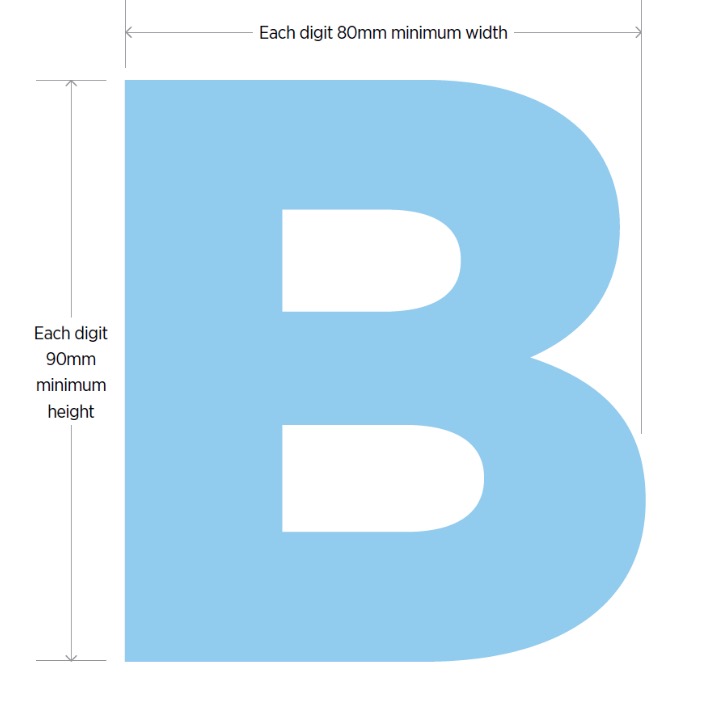
  • To help with identification, powered vessels over 4 metres and non-powered vessels over 6 metres are required to be clearly marked with a name or number.  
  • The mark needs to include a minimum of two letters or numbers which are not a vessel’s brand, make or model. 
  • The name and/or number must be of a contrasting colour that is legible from a distance of 50 metres or compliant with a national sporting body standard. 
  • Smaller vessels are encouraged to have some kind of identifier on their boat to help with determining ownership or knowing who we may be looking for in event of an emergency. 

name boat