Skip to main content Skip to footer
Menu
water water

Taking and using water

We monitor and manage how much water can be taken from surface water (streams, rivers, lakes and wetlands) and groundwater (via bores) to ensure it is used sustainably. Accurate water data is essential for sustainable, effective water management across the Bay of Plenty.

What you're allowed to take without consent

Small amounts of water can be taken without a resource consent. This includes water for household use, animal drinking water, cultural needs and firefighting.

You may also take small volumes of water as a permitted activity:

  • up to 15 cubic metres per day, per property from surface water (streams, rivers, or lakes), or
  • up to 35 cubic metres per day, per property from groundwater (bores).

The full conditions for permitted water takes are set out in Rule 41 (Surface Water) and Rule 38 (Groundwater) of the Regional Natural Resources Plan.

Water taken for dairy shed use, such as milk cooling or washdown, requires a resource consent if the permitted activity conditions are not met. As a guide, the permitted volume is typically exceeded at around:

  • 215 cows when taking surface water, or
  • 500 cows when taking groundwater.

Water supplied by others

If a council or someone else supplies you with water they will probably already have a resource consent. If this is not the case, and you want access to larger volumes of water, you may need to obtain a resource consent to take the water yourself.

For more information about applying for a resource consent, including how to assess environmental and cultural effects, visit our Applying for water take resource consent page.

Water meters accurately measure the rate and quantity of water being taken. It helps consent holders meet conditions and gives a valuable insight into how and when water is being used—helping improve efficiency on the farm or orchard.

Meters must be:

  • Verified in place as accurate to within ±5%
  • Sealed and tamper-proof
  • Suitable for your water quality and take volume
    • And must be:
      Capable of producing data in a format suitable for electronic reporting.

When choosing a meter, consider:

  • Flow range and pressure
  • Power source (solar/battery)
  • Installation space and access
  • Maintenance needs
  • Cost

Specification

Electromagnetic

Ultrasonic

Mechanical

Accuracy

±0.15%–2%

Better than ±2%

±2–5%

Reliability

Very high

High

Medium

Lifespan

20 years

15 years

4 years

Power required

Yes (or solar/battery)

Yes (or solar/battery)

No

Suitable for silt/weedy water

Yes

Yes

No

Cost

Medium

Low

Low

Always ensure your meter complies with your consent conditions. For more information, talk to a water meter supplier. The Irrigation NZ website provides information on 'Blue Tick' approved water contractors.
To ensure accurate readings, meters must be installed according to the manufacturer’s specifications. For example:

  • A straight pipe section of at least 10 times the pipe diameter before the meter.
  • A straight section of 5 times the pipe diameter after the meter.
  • As per manufacturer’s specifications, meter orientation and location
  • Avoid installing near elbows or valves that cause turbulence.

Incorrect installation can affect accuracy. In some cases, existing headworks may need to be upgraded to support a meter. Always check your consent conditions for any specific requirements and reach out to your water system installer on the best approach that meets your consent conditions and best practice.

All water meters that are required under the National Regulations or a resource consent must be verified to be accurate within ±5%. Verification is required when the meter is first installed and then every five years, by someone approved by Council.

To allow for verification, a verification port must be built into the headworks—ideally as close as possible to the meter. This involves permanently installing an extra valve, pipe, or connector socket where a verification rig can be attached.

Bay of Plenty Regional Council only accepts verifications completed by a Blue Tick accredited service provider. These providers will submit a verification report directly to Council.

If a water meter fails verification, the consent holder must work with an accredited service provider to resolve the issue. This may involve repairing or replacing, and reverifying the meter to meet compliance requirements. 

To help ensure water use is accurately recorded, monitored, and managed across Bay of Plenty, all water take consent holders are now required to electronically transmit daily water use data to Council. This is done through a telemetry device connected to your flow meter. The device records electronic signals based on water volume and sends this data automatically to our system—usually via mobile or radio network. 

Your data is securely stored and used to:

  • Check compliance with your consent
  • Inform regional water management
  • Improve water allocation planning

Benefits of telemetry for you:

  • Alerts if you’re nearing your consented limits
  • Notifications of equipment issues

You can set up telemetry yourself or contact a telemetry service provider to check your site’s suitability and get a tailored quote. A directory of approved Blue Tick accredited providers is available on the Irrigation New Zealand website

In areas with limited network coverage, telemetry may not be feasible. In such cases, you may apply for an exemption to continue manual reporting.

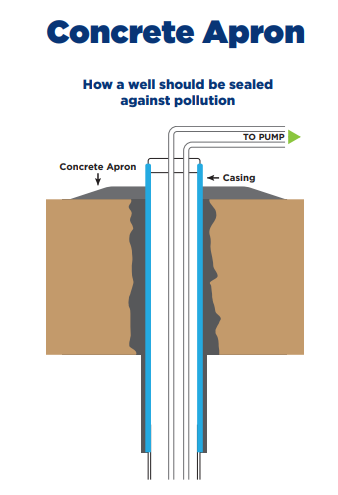
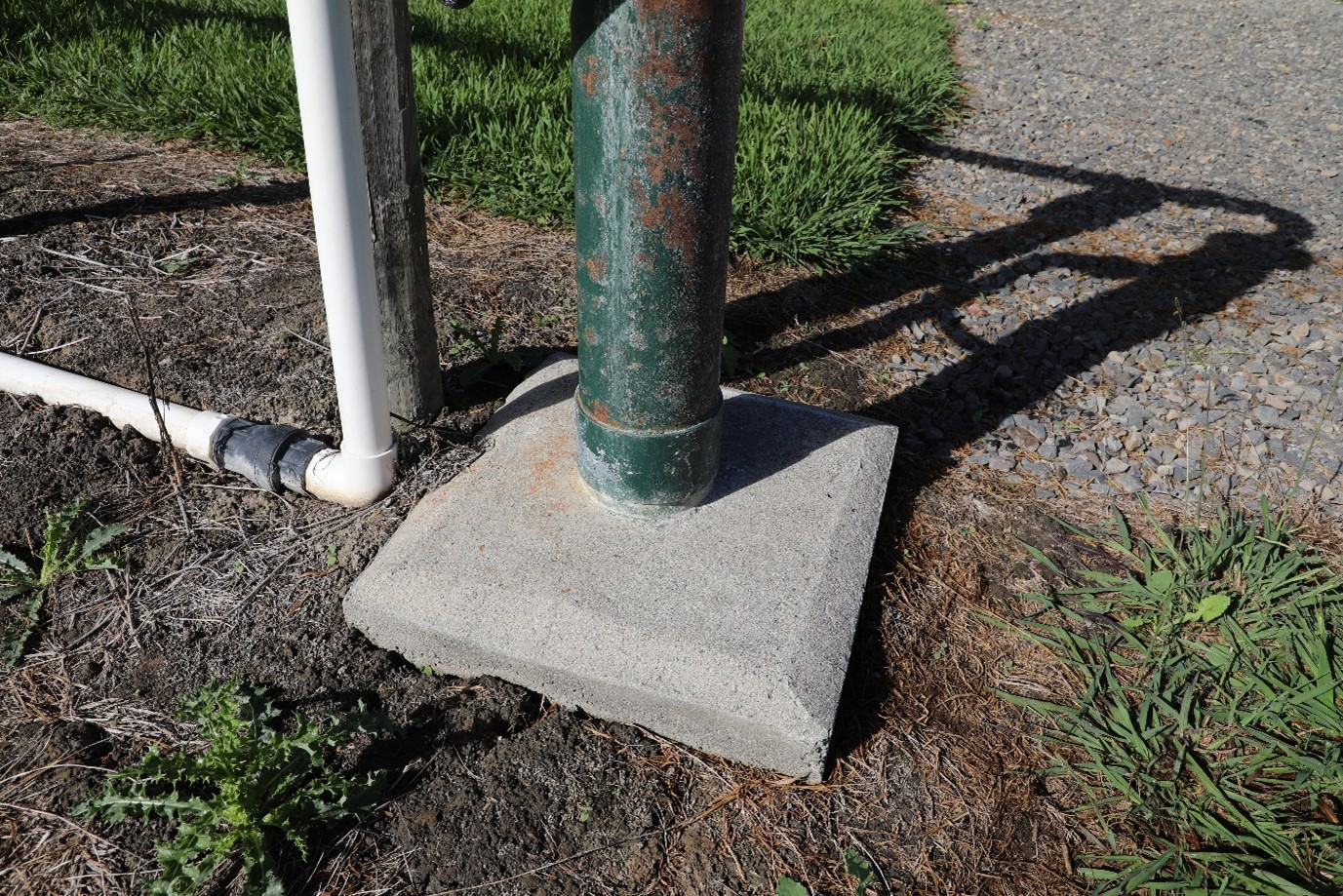
To protect groundwater from contamination, all groundwater bores must have a sealed concrete apron that slopes away from the bore This is a condition in most groundwater resource consents and required by the Regional Natural Resources Plan.

The apron acts as a barrier, stopping stormwater, dirt, and pollutants from entering groundwater. It’s usually installed by the driller but can be added later if needed. We recommend a concrete apron:

concrete apron

  • 500mm x 500mm or larger.
  • Thick enough to deflect surface water away from the bore casing.
  • Installed to prevent surface water scouring under the apron.
  • Factoring in adequate clearance from the top of the apron to the bore head flange.

concrete apron

View the information sheet to learn more about how to Build a Concrete Apron. 

Bore maintenance checklist:

  • Any holes in the side of the casing sealed?
  • Surface rust removed and treated?
  • Are all gaskets and seals in place and in good condition?
  • Are all bolts and welded joints secure and undamaged?
  • Are pipe supports installed where needed?
  • Is the bore casing raised high enough to keep out stormwater or floodwater?
  • Are chemicals and fuels stored well away from the borehead?
  • To protect water quality, does the sprayfill station divert water away from the bore head? 

A backflow prevention device must be installed wherever fertiliser or other chemicals are added to an irrigation system. This is essential to prevent contaminants from flowing back into the water source—whether it’s surface water or a groundwater bore—and protects both the environment and public health. 

Future changes to freshwater rules

Regional Council has paused the release of draft freshwater plan changes while new Resource Management legislation and national direction are developed.