

From paddock to salt marsh: Helping nature make a comeback
What started as business as usual beside State Highway 2 (SH2) has turned into a positive step for the local environment that will help to restore the Waiōtahe Estuary for generations to come.
Just outside of Ōpōtiki, the NZ Transport Agency Waka Kotahi (NZTA) SH2 Wainui Road to Ōpōtiki safety improvements project has been in construction since 2021.
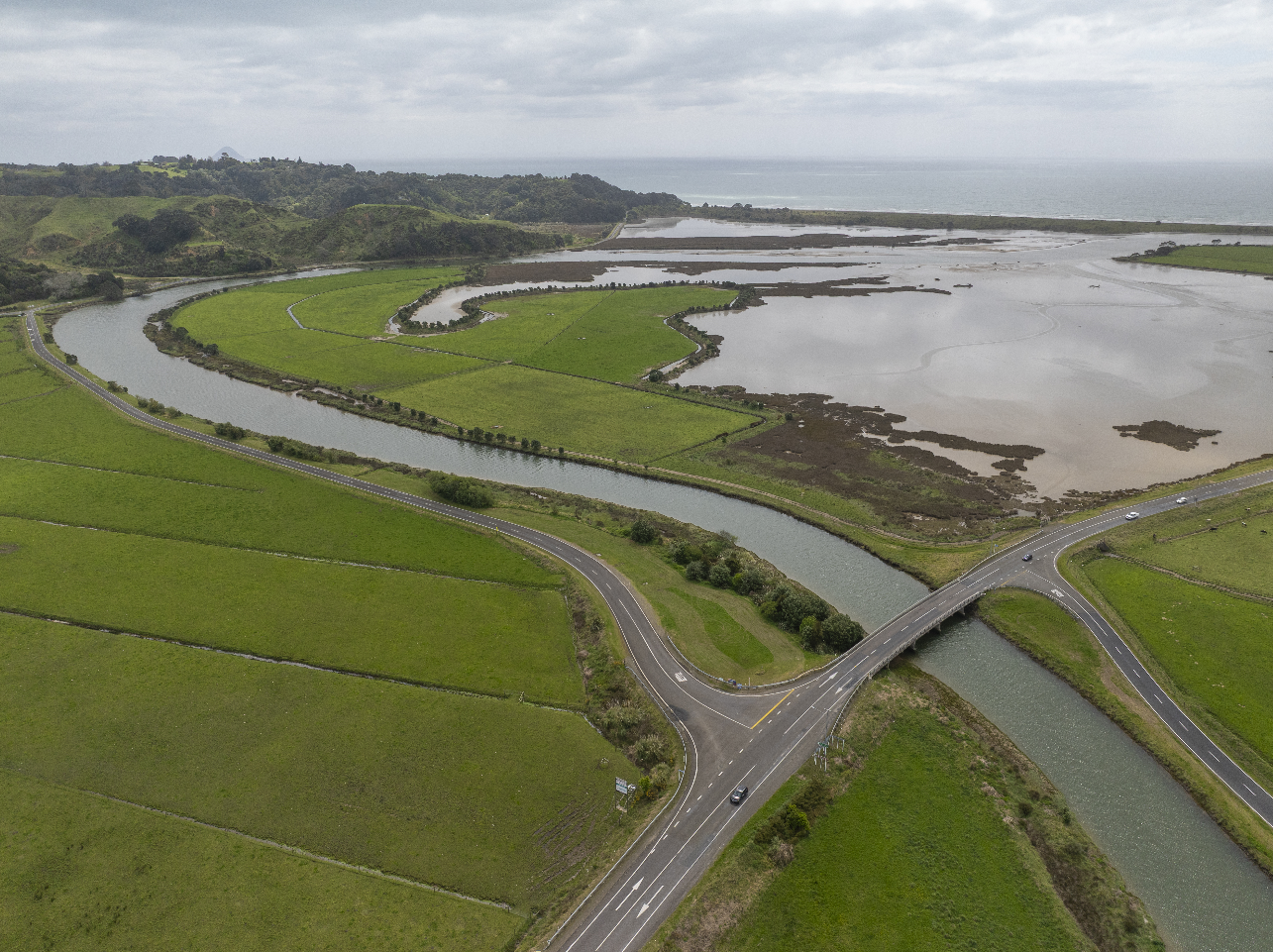
The final section of the project sits right next to the Waiōtahe River Bridge, on the edge of the Waiōtahe Estuary. This section includes the construction of two tear-drop roundabouts, which will make the road safer for those turning on and off SH2.
The privately owned land on either side of the road where the roundabouts will be constructed is connected by a stock underpass. The land had been used as productive farmland for many years. However, historically, this low-lying coastal land once formed part of a natural salt marsh system connected to the Waiōtahe Estuary. Over time, drainage works, stopbanks and land conversion meant the area was disconnected from the tidal influence, allowing it to be converted into pasture.
Salt marshes are incredibly valuable to the ecosystem. They filter sediment and nutrients before they reach rivers and estuaries, and they store significant amounts of carbon. They provide a natural buffer against storms and tidal surges, helping protect inland areas and infrastructure. Initial ecological changes occur within the first one to two years, but it typically takes around five years for a fully functioning salt marsh ecosystem to return, with plant communities and wildlife re-establishing over time.
To keep the farm running after construction of the roundabouts, the existing underpass would need to be extended as part of the project. Given the history of the land, the project team began to explore the idea of disconnecting the culvert instead. This would mean that a small area of land could no longer be farmed. The impact on overall farm productivity would be minimal, while providing the benefit of increased salt marsh habitat and remaining within the project budget
Bay of Plenty Regional Council had previously recognised the environmental value of this land because of its location, hydrology and potential to be reconnected to the estuary. The land was one of the few remaining places where large‑scale salt marsh restoration was still possible, making it a priority for future ecological enhancement.
That made the Regional Council a natural partner in the project and will take the lead on the restoration effort. Together, NZTA and the Regional Council have secured 16ha of land and NZTA will decommission the underpass in line with engineering and safety guidance.
When comparing the costs, buying the land did not add any additional cost to the project – funding that would have been used to extend the underpass was instead redirected to land purchase, with the Regional Council covering the remainder.
“This only worked because of the partnership. When we approached the idea with local iwi, Te Ūpokorehe and Whakatōhea, the response was widely positive” says NZTA Senior Project Manager Julio Marquez.
Ūpokorehe Pou Mātauranga, Wallace Aramoana Snr, says Te Ūpokorehe is happy to see the return of a significant waahi tapu and nōhanga (settlement) of Ūpokorehe ancestors.
“Te Ūpokorehe look forward to leading the repatriation project alongside the Regional Council returning the area to its natural state, allowing the native plants and wildlife species to return and regenerate.
“As this area is also home to several Ūpokorehe Kaitiaki, and a repository of Ūpokorehe hītori (history), Ūpokorehe tikanga (customs and traditional values) will be fundamental toward achieving successful project outcomes. We thank Waka Kotahi for their forward thinking, negotiating this positive outcome for Ūpokorehe and our wider community.”
Logan Bertram, Environmental Manager Te Pou Oranga o Te Whakatōhea, says this restoration project is especially meaningful to him.
“I grew up along the Waiōtahe Awa (River) and have strong memories of this place, including seeing kōtuku (white heron) along this stretch of the river.
“Restoring the area back to a functioning salt marsh creates the conditions and habitat for taonga (treasured) species to return. For our community, this project represents a long-term investment in the health of the estuary one that future generations can benefit from, connect to, and be proud of.”
The restoration will be led by the Regional Council, in partnership with iwi. This work sits within the Regional Council’s existing restoration programme.
Regional Council Coastal Catchments Manager Charles Harley says the restoration process will begin by assessing hydrology, followed by potentially infilling old drains and stopbanks to return the land to a more natural state.
“The idea is to let the tides flow naturally again, then replant the area with appropriate salt marsh and wetland plants as would have once been there.
“Over time, the salt marsh will return to life. This will help improve water quality, habitat for native flora and fauna, including threatened species, and support flood management.”
In the future, the restored salt marsh will improve water quality, support native fauna and flora, enhance flood management and increase the overall resilience of the Waiōtahe Estuary.