


Decades of Care at Lake Ōkāreka | A Living Legacy of Restoration
For over two decades, the Lake Ōkāreka Landcare Group has been quietly transforming the landscape around their beloved lake.
The dedication of the group is a shining example of long-term environmental restoration supported by strong partnerships with Bay of Plenty Regional Council, Department of Conservation (DOC), local councils and residents.
Since its inception in 2003, the group has achieved significant milestones, including restoring 10ha of wetland, supporting threatened native species, including matuku-hūrepo (wetland bittern), and sustaining a localised kōaro (freshwater fish) population.
Brian Law and Mike Goodwin have been part of that journey from the beginning. Mike, along with his wife Sandra, were founding members of the group, while Brian started back in 2004, saying he has been “full time basically since.”
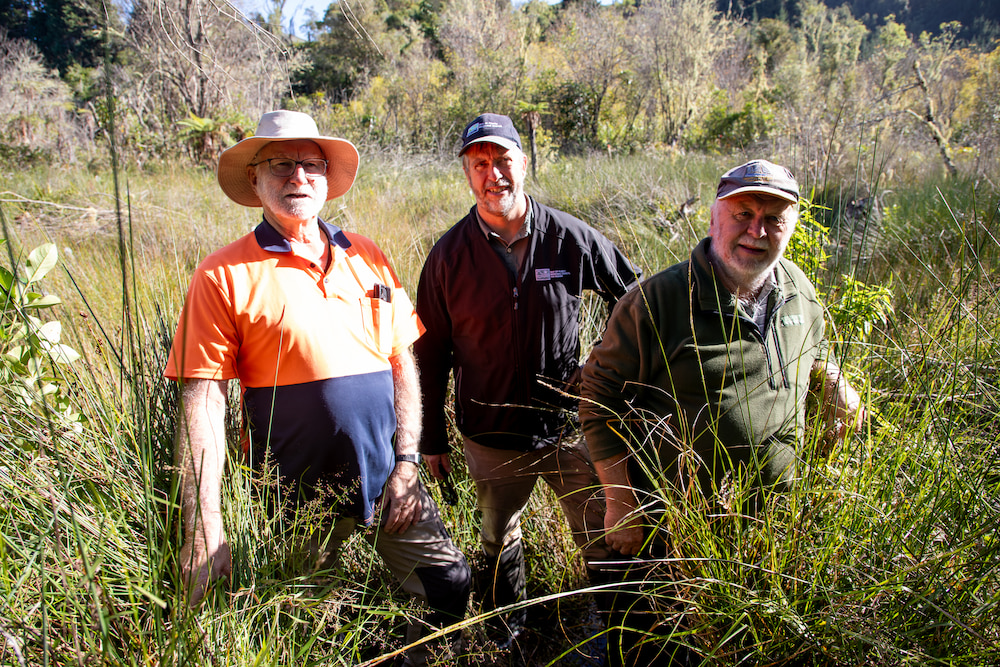
Mike Goodwin, Scott Kusabs and Brian Law at the edge of the wetland that the Lake Ōkāreka Landcare volunteers have worked hard to restore (L-R)
For Mike, the motivation is simple: “Shouldn’t we all be leaving the place better than we found it?”
Both have focused much of their energy on restoring a significant wetland near the lake, a project many would shy away from because of its scale and the physical demands.
“The wetland was always going to be the big one,” says Mike. “It was the last project on the list because we knew what it would take.”
The wetland plays a crucial role in lake health. Like kidneys, Mike explains, “it purifies the water before it goes into the lake and helps improve water quality.” Importantly, the wetland was never drained or used for farming, meaning that it can recover if cared for properly.
Over the past seven years alone, the group has planted more than 10,000 trees, replacing pest trees and invasive weeds with native vegetation.
“Both Mike and I are weed people,” Brian says with a chuckle. “We were always in here, working on the pest plants, and we could see the potential of the wetland.”
Over time, that vision has become reality. Willow trees, once dominant and overrunning the area, have largely been removed, allowing native reeds and plants to thrive.
The work is slow and demanding but deeply rewarding. Mike smiles and points to the birdsong all around him, just one reminder of how far the group have come in terms of restoration and the return of native species to the area. “Working all day among the birdsong has it’s perks.”
Beyond the focus on the wetland and improving water quality, the care group have put extensive efforts into biosecurity with both pest plant and animal control too. Regular trapping has allowed for the return native species including miromiro (tomtits) and toutouwai (native robins) – absent for years but now their loud chorus is unmissable. Populations of kōaro (native freshwater fish classified as a declining species) are establishing, only possible through enhanced water quality.
The elusive matuku-hūrepo (native bittern) has also been observed in the area, indicating an improving ecosystem. With less than 1000 left in Aotearoa, their presence is dependent on ecologically diverse habitats and rich food supplies. It’s a promising reminder of the mahi being done paying off.
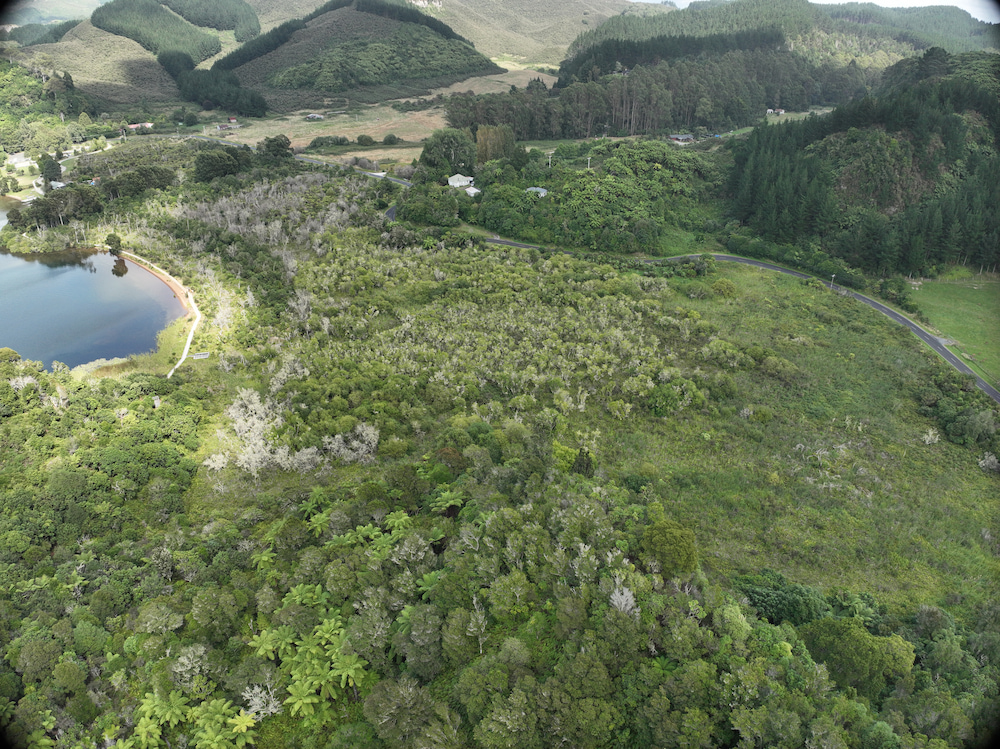
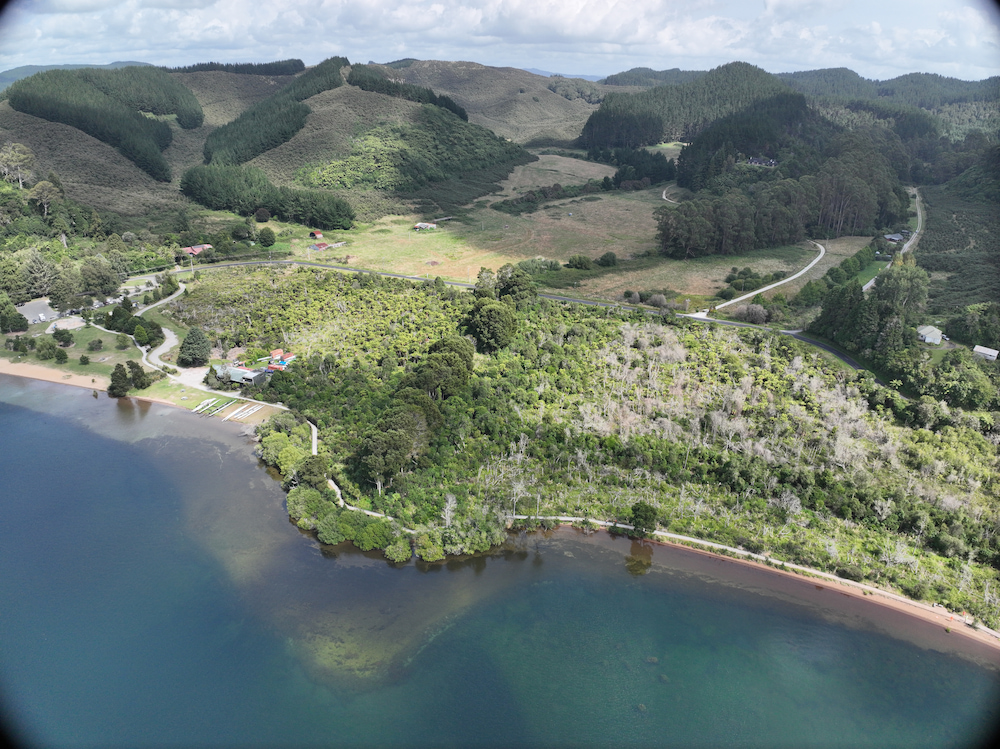
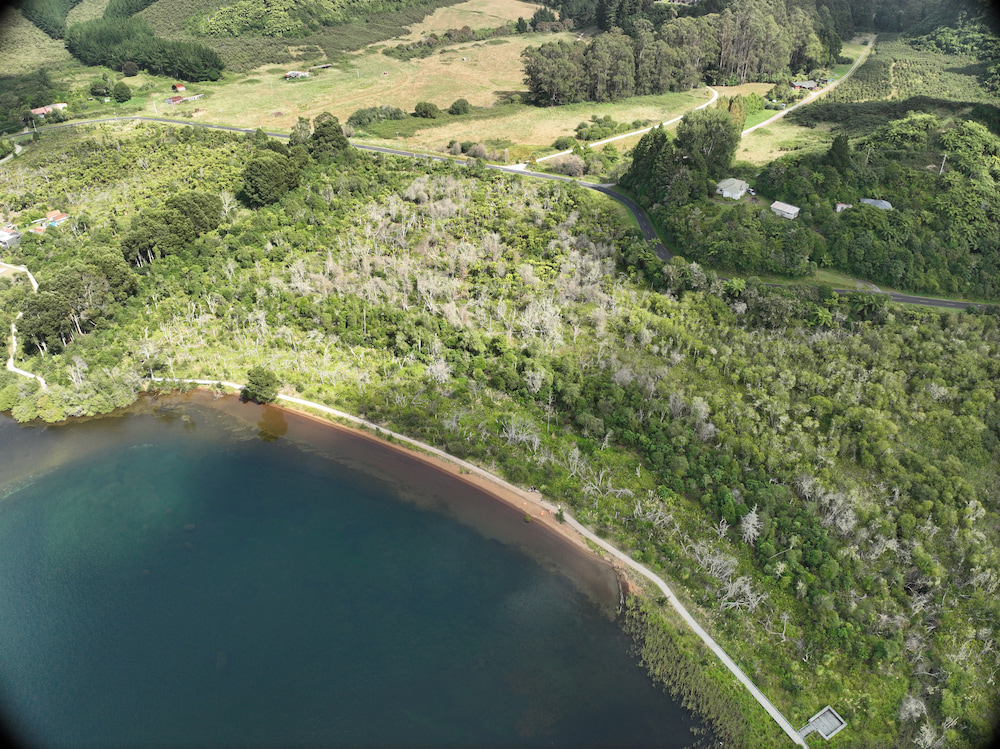
Support from Bay of Plenty Regional Council has been essential to making this possible Mike explains. “The council supplies plants, chemicals and practical support, and we work with DOC to ensure the restoration aligns with what the ecosystem would have looked like before the Tarawera eruption.”
It’s passionate communities like those at Lake Ōkāreka that make this work happen across the rohe (region) says Regional Council Land Management Team Leader Scott Kusabs. “Our care group programme enables us to fund incredible work for biodiversity for the region. The results are due to volunteers like Mike, Brian and their caregroup who want to make a difference.”
Regional Councillor for Rotorua and Ōkāreka resident Anna Grayling says the impact goes far beyond the project itself. “The multiplier effect from groups like this care group is enormous. When we give them a dollar, the return on investment for the community is huge.”
The Care Group mahi complements the wider work in the catchment under the Lake Ōkāreka Action Plan. She describes the restoration as the result of 15 to 20 years of collaboration through bringing together councils, Te Arawa Lakes Trust, not‑for‑profit groups and residents.
“We’ve had input from the rural community and residents; everybody who lives out here loves this place and cares deeply about it. People have put in the hard work, and now we can start to reap the rewards.”
Anna says community backing has been essential for the mahi done – not just around the lake, but the wider catchment.
“This is what good mokopuna decision‑making looks like,” Anna says. “It hasn’t happened overnight, but the results mean this lake will be clean and swimmable for future generations.”