


Ōtara stopbank upgrade
Ōtara stopbank upgrade
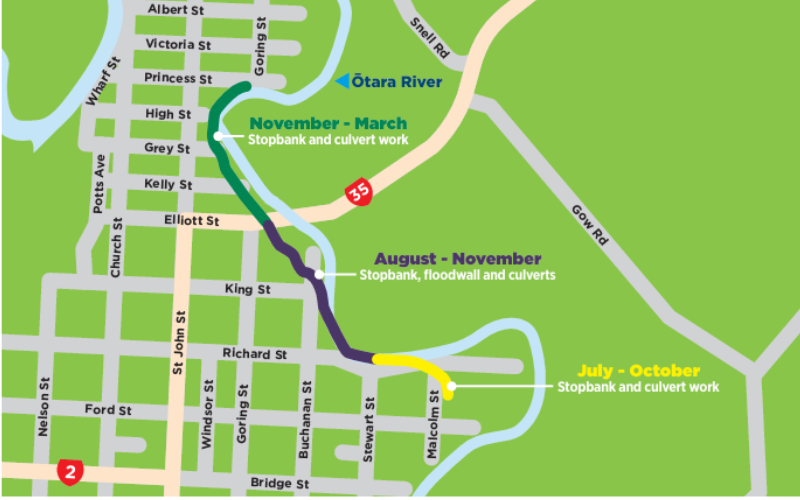
The Ōtara stopbank upgrade will improve flood defences (stopbanks and floodwalls) along the left bank of the Ōtara River, from Ford Street to Princess Street in Ōpōtiki.
Why are we doing this?
Flooding is the most common natural hazard in Aotearoa, with a major flood event occurring on average every eight months. As the climate changes, communities across New Zealand need to adapt to meet the challenges of a rising sea level and more frequent, more significant rain events that may cause flooding.
Regular asset performance reviews of our flood defences help to ensure they are in good condition so they can perform when we need them most. A recent review of this section of the Ōtara River identified the need to upgrade these defences.
This project is one of the many we have underway across the rohe to manage, maintain and improve our flood protection network (worth more than $400m).
Maintaining access to the awa
We know how important maintaining access to the awa is for mana whenua and we hope to work closely with you to ensure the whole community can continue to have access.
For this project, most of the flood defences we are upgrading will replace what already exists. In some places we will be extending the floodwall, however, this will not prevent access to the awa. We want to ensure that what we design not only functions well in the face of future floods but is also a place that the community can continue to feel connected to the awa.
What’s happening?
Work to upgrade flood defences along the Ōtara River is progressing well.
Key features of the work include:
- Upgrade of flood defences.
In most places, we will be raising the stopbanks between 500-700mm in height to meet the agreed level of service. We will also be upgrading and extending the floodwall further along Richard Street. - Replacement of seven culverts.
Culverts are a vital part of the flood protection network as they allow stormwater from the landside to flow out into the river. The culverts will be fitted out with flap gates to help control the flow of water. During a flood event or when the river is high, the flap gates close preventing water from the river to flow inland. - Retaining the shared pathway as a part of the Motu Trails.
Keeping everyone safe and sound
As construction activity increases, we’d like to thank everyone for helping keep the work site safe.
Large machinery, including 32-tonne excavators and heavy earthmoving trucks weighing up to 50 tonnes when fully loaded, are operating throughout the project area each day.
These machines require considerable distance to stop, and operators don’t always have clear visibility (people and dogs) around their equipment. Please stay outside fenced work areas, follow all signage and keep a safe distance from machinery.
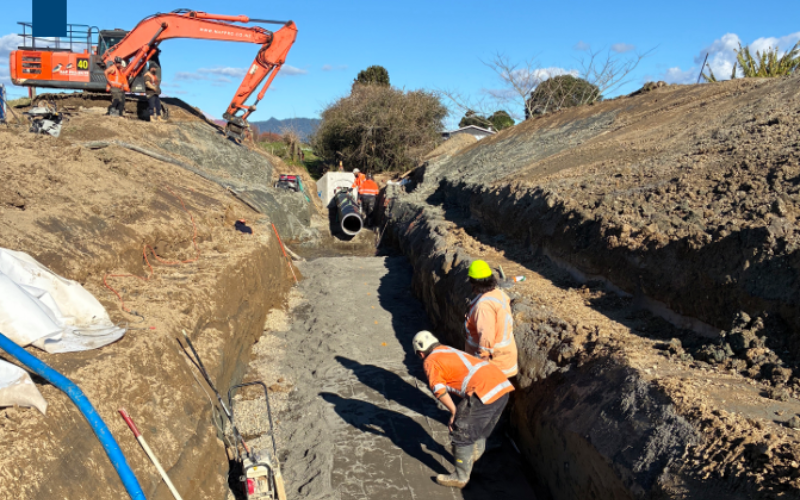
Image: culvert work underway
We’re also continuing to see horses being grazed in and around active construction areas. We appreciate this has been a long-standing practice, however as work progresses, we’d be grateful if owners could keep horses well away from construction zones. This way we can help keep people, animals and our construction crews safe. A little extra space goes a long way—and we’ll all get to enjoy the finished project sooner.
Government funding support
The Ōtara River stopbank upgrade is being delivered with support from the Government’s Regional Infrastructure Fund, administered through Kānoa - Regional Economic Development & Investment Unit. This funding is helping deliver important flood resilience improvements for the Ōpōtiki community alongside investment from Bay of Plenty Regional Council.
Drone surveys
From time to time, you may notice drones operating over the project area. These flights are carried out by trained operators within New Zealand’s Civil Aviation Authority rules and are used to survey construction progress, monitor completed works and capture project updates.
Any footage collected is used solely by the Regional Council for the purpose of this project only. We respect the privacy of nearby residents and property owners, and the project team takes care to ensure flights are undertaken responsibly and appropriately.